..
CHAPTER 17: PRINCIPLES AND PRACTICE OF CONTROLLING FUNGAL GROWTH
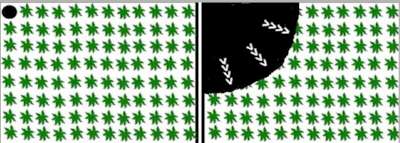
Fig. 17.1. Diagrammatic representation of the spread of disease caused by Rhizoctonia from a pocket of surviving inoculum.[© Jim Deacon]
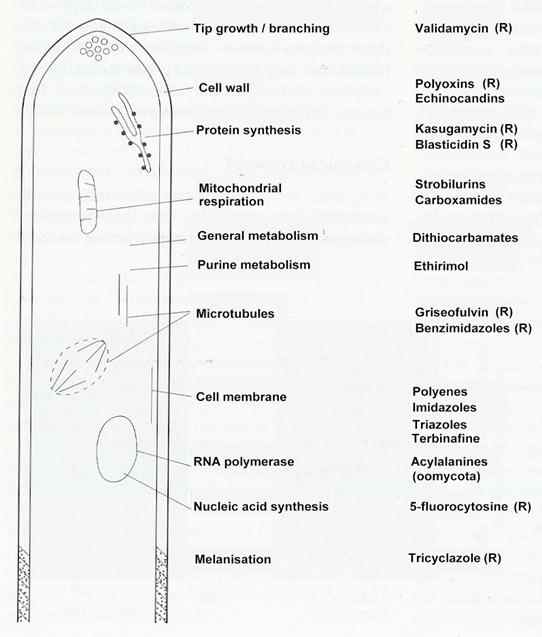
Fig. 17.2. The main cellular targets for chemical control of fungi that cause plant and human diseases. Compounds shown as “(R)” have limited usage. [© Jim Deacon]
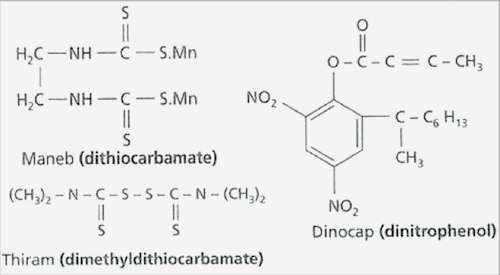
Fig. 17.3. Three examples of protectant fungicides: maneb, thiram and dinocap
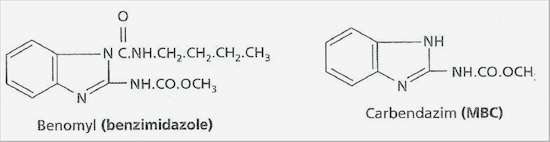
Fig. 17.4. Examples of two systemic benzimidazole fungicides
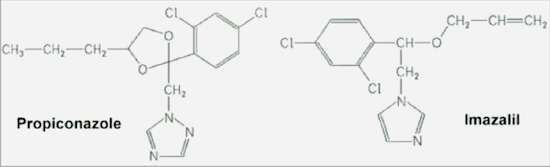
Fig. 17.5. Examples of azole fungicides: propiconazole is a triazole with 3 nitrogen atoms in the heterocyclic ring; imazalil is an imidazole, with two nitrogen atoms in the heterocyclic ring.
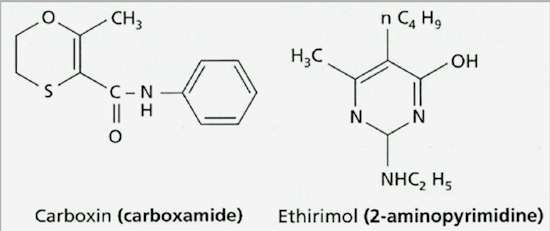
Fig. 17.6. Systemic fungicides of the carboxamide and 2-aminopyrimidine classes
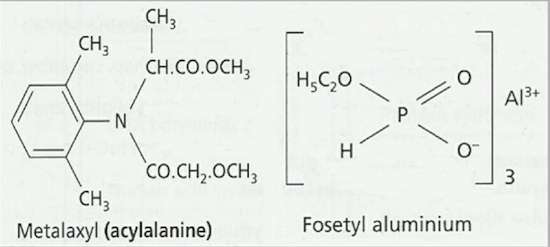
Fig. 17.7. Metalaxyl and fosetyl-aluminium, two fungicides that act specifically against Oomycota.
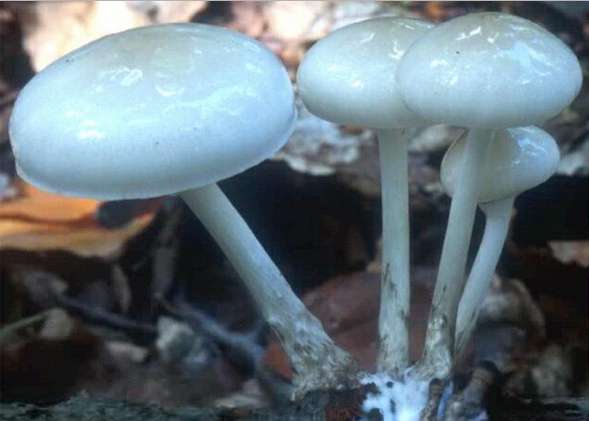
Fig. 17.8. Oudemansiella mucida, the ‘porcelain fungus’ that grows on rotting wood and is one of the original sources of strobilurin-type fungicides. [© Marek Snowarski, FUNGI OF POLAND; www.grzyby.pl. Reproduced with permission]
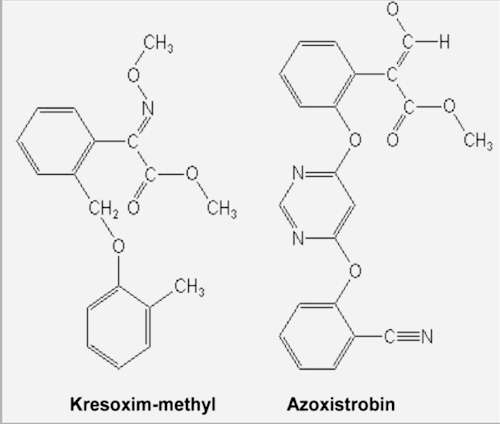
Fig. 17.9. Structures of two strobilurin fungicides
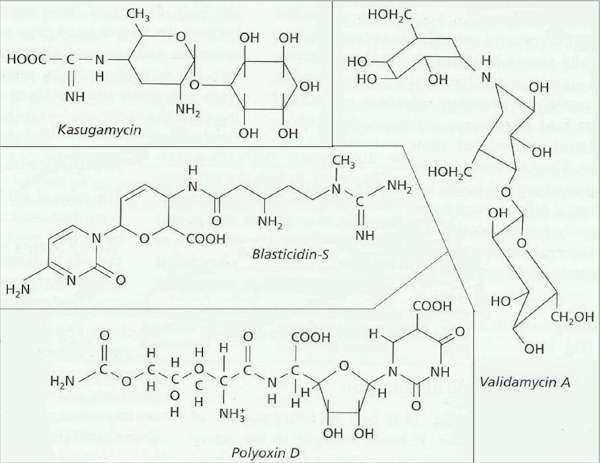
Fig. 17.10. Japanese agricultural antibiotics
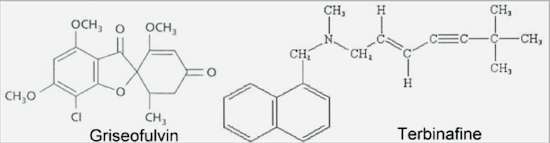
Fig. 17.11. Structures of griseofulvin and terbinafine, two compounds used to treat dermatophyte infections.
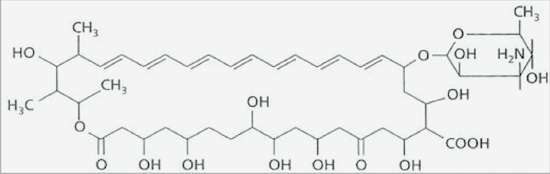
Fig. 17.12. Amphotericin B, a member of the polyene macrolide class of antifungal antibiotics
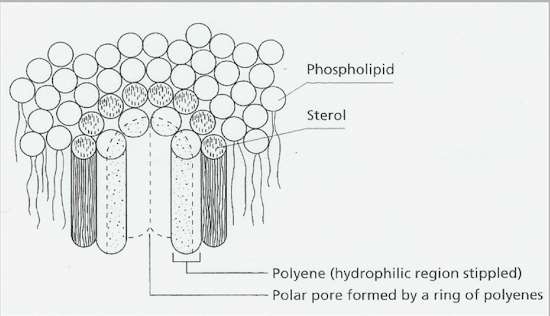
Fig. 17.13. Proposed mode of action of amphotericin B and similar large polyene antibiotics. The antibiotic shows strong affinity for ergosterol in the fungal cell membrane. It binds to ergosterol molecules and repositions them so that the polyene-sterol complexes assemble to form a 6-membered polar pore through which small ions diffuse freely. Note that only one layer of the phospholipid bilayer is shown in this diagram. [Based on a diagram in Gale et al., 1981]
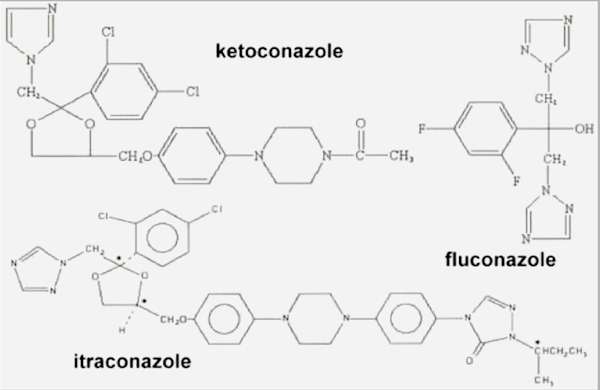
Fig. 17.14. Imidazole and triazole drugs
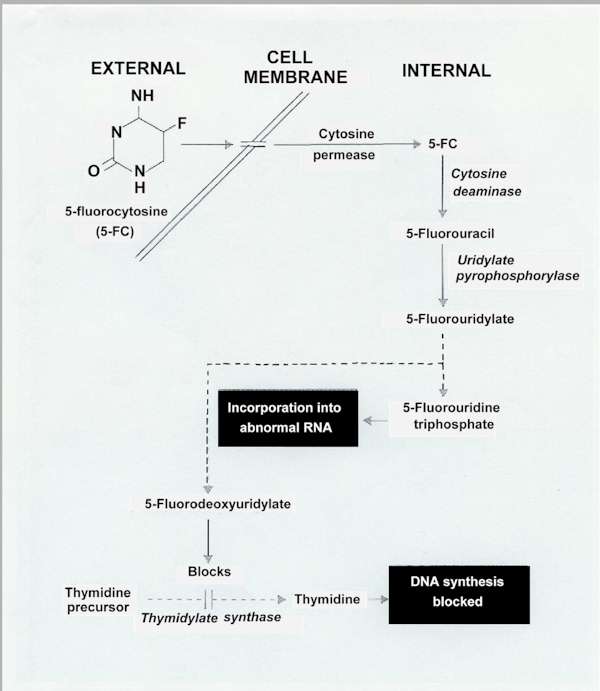
Fig. 17.15. Mode of action of the synthetic pyrimidine, 5-flucytosine
|
|||||||||||